If the taualunga is the crown of Samoan dance, then siva Samoa is its soul. The siva is a solo dance performed primarily by women, though men have their own traditions as well. It is a dance of storytelling — every movement of the hands, every tilt of the head, carries meaning.
The Language of Hands
In siva Samoa, the hands are the voice. A specific gesture might represent the ocean, a bird in flight, the gathering of flowers, or the longing of a lover. The dancer’s feet barely move — the power is in the upper body, in the controlled, flowing movements of the arms and the expressive face.
Unlike many Pacific dances, the siva is not rhythmic or percussive. It flows. It is performed to a gentle song or chant, and the dancer’s movements follow the emotional arc of the music rather than its beat.
Siva Afi: The Fire Knife
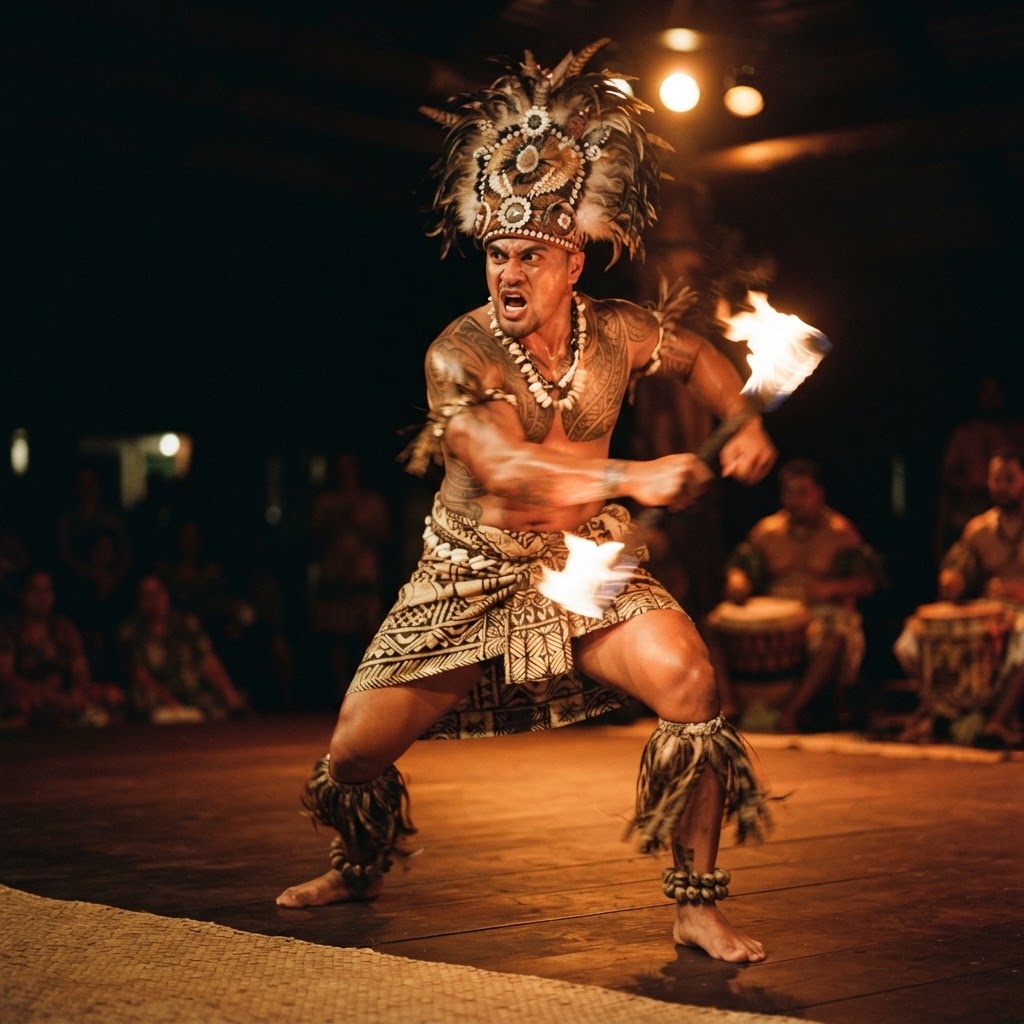
While the siva is graceful, its counterpart — the siva afi — is spectacular. The fire knife dance involves a performer spinning and twirling a burning blade, often lit at both ends. Originating as a warrior’s display of skill and courage, the siva afi has become one of the most recognizable Samoan cultural performances worldwide.
The siva teaches us that power is not always loud. Sometimes it is the stillness between movements that speaks loudest.
Dance as Identity
For Samoan Americans, dance is often the most accessible entry point to their heritage. You may not speak the language fluently. You may not know your village. But when the music starts and your hands begin to move in patterns your body somehow remembers — you know. You are Samoan. And the dance remembers what the mind may have forgotten.