
Estimated reading time: 5 minutes
Imagine being trusted with a name that your ancestors carried long before you were born.
It is not just a name to place before your own. It carries family history, relationships, responsibilities, and expectations. When people hear it, they may think of the relatives who held it before you—and they will notice how you carry it now.
That is part of what it means to become a matai, a holder of a Samoan family title.
Start with the family, not the crown
English speakers often translate matai as “chief.” That translation is useful, but it can also create the wrong picture. A matai is not simply Samoa’s version of a movie king sitting above everyone else. The role begins with the ‘āiga, the extended family.
A matai represents and serves that family. Depending on the title, family, and village, the matai may help guide major decisions, speak for the family in a village council, care for customary land, settle disagreements, organize support during important events, and make sure cultural responsibilities are met.
The larger system is called faʻamatai—the Samoan chiefly system that organizes leadership within families and villages. It is deeply connected to Faʻa Samoa, the Samoan way of life.
Here is the central idea: a matai title is not only an honor received; it is a responsibility accepted.
Leadership measured by service
Online culture can make leadership look like attention: the biggest following, the loudest voice, or the most impressive title. Matai leadership asks a different question:
Who can be trusted to put the family’s well-being ahead of personal recognition?
A matai may be called upon when the family is celebrating, grieving, facing conflict, making decisions about land, or meeting an obligation to the village. The work can involve time, diplomacy, cultural knowledge, generosity, patience, and expense. The title matters because the service behind it matters.
This does not mean the matai acts alone or has unlimited power. Important family matters call for discussion with family members, and a matai’s authority operates within family, village, customary, and national structures. Good leadership requires listening as well as directing.
A living connection to ancestry
A matai title is known as a suafa, a formal title or name. Many suafa have traveled through generations. The title links its present holder to the family’s gafa—genealogy—and to the stories, places, relationships, and responsibilities associated with that name.
That makes wearing a title different from winning an award. An award usually tells people what you already accomplished. A matai title also tells people what you are now expected to protect and continue.
The title becomes part of how a matai is addressed. In customary naming order, it comes before the person’s given name. More than one person may sometimes hold the same family title, with the family reaching agreement about how the title is shared.
Why land is part of the story
Customary land is not simply real estate. It connects family members across generations and provides a physical home for identity, livelihood, and belonging. A matai helps administer family land for the benefit of the ‘āiga. The matai does not personally “own” communal family land in the way someone might privately own and sell a house.
That difference matters. The role is closer to stewardship: caring for something received from earlier generations so it can still support those who come next.
Could a woman become a matai?
Yes. Samoan men and women can hold matai titles. In practice, women have historically made up a minority of titleholders, and participation can be shaped by the customs of particular families and villages. Still, the right of women to hold titles is an important part of understanding the system accurately.
What this means for young Samoans
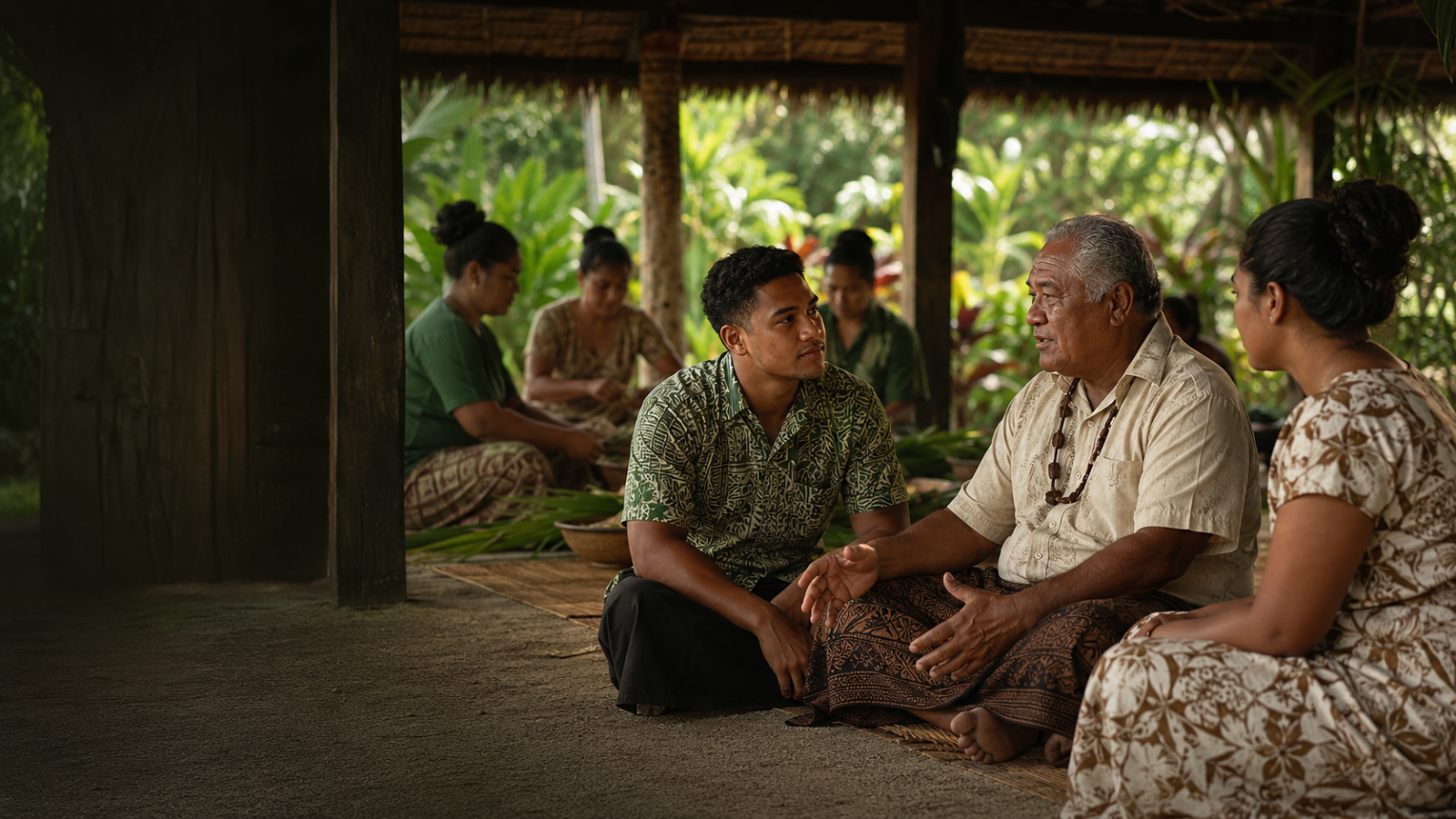
You do not need to hold a title to begin serving your ‘āiga. You can learn the names of your villages, ask about your gafa, listen when elders explain family history, practice the language, help at family events, and learn why certain responsibilities are handled the way they are.
For young people raised away from Samoa, those first conversations may feel awkward. You might worry that you do not know enough or that you should have started earlier. Start anyway. Cultural connection is not a test you must pass before asking questions. Respectful curiosity is one way the next generation keeps knowledge alive.
The most useful first question may not be, “Could I become a matai someday?”
It may be: “How can I serve my family now?”
Words to know
- Matai: Holder of a Samoan family title; often translated as chief.
- Faʻamatai: The Samoan system of chiefly family and village leadership.
- ‘Āiga: Extended family or kin group.
- Suafa: A formal title or name.
- Gafa: Genealogy or ancestral descent.
- Faʻa Samoa: The Samoan way of life.
Up next: Aliʻi and Tulāfale: Two Kinds of Matai, One Shared Purpose